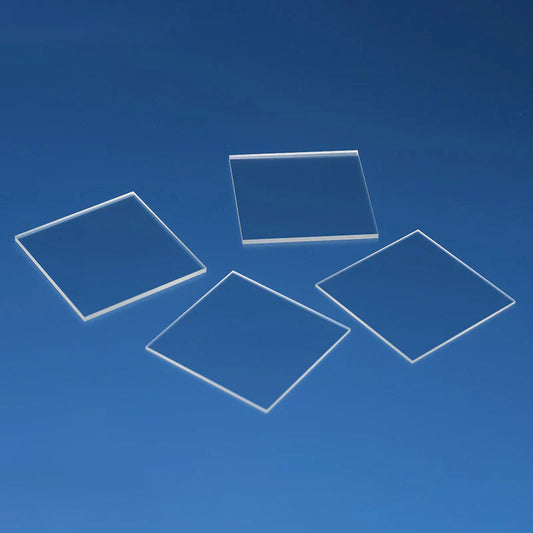
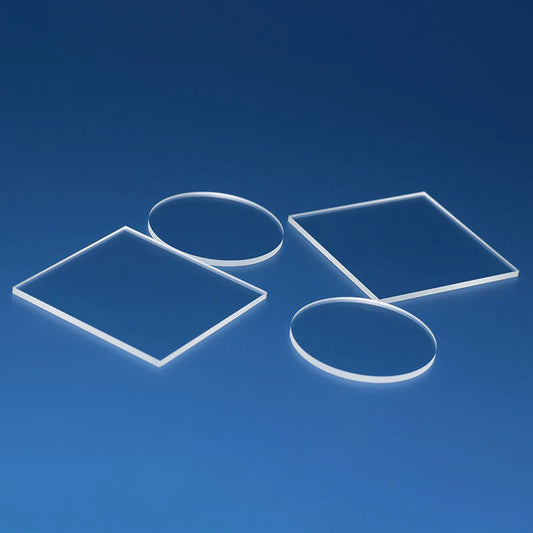
Protection geometry
Use plane, wedged, Brewster, dome or reference-flat geometry according to sealing, field of view and reflection control.


PRODUCT FAMILY
Optical dome windows protect sensors while preserving a wide field of view and reducing aerodynamic or environmental exposure.
K9 optical glass and UV fused silica families support imaging, tracking and enclosure applications with different spectral and thermal requirements.
SELECTION PRIORITIES
2 product families are available. Use the engineering filters below to narrow the catalog before comparing exact models.
Use plane, wedged, Brewster, dome or reference-flat geometry according to sealing, field of view and reflection control.
Check thickness, flatness, parallelism or wedge and surface quality against the transmitted-wavefront requirement.
Balance spectral transmission, thermal expansion, hardness and environmental durability before selecting a coating.
PRODUCT FINDER
Compare product families, then open a family to select the exact model, dimensions and coating.


Try another keyword or clear the search field.
SELECTION QUESTIONS
Technical answers to the questions that most often affect model selection.
Send your material, wavelength, dimensions and quantity for review.
TECHNICAL RESOURCES
Selection guides and practical notes matched to dome windows.

Borosilicate glass is a silica-based glass with boron trioxide added to the mix. That one addition changes how the glass behave...
Read article →
Soda-lime glass and borosilicate glass are both silica-based, but a difference in composition gives them very different perform...
Read article →
Borosilicate glass and fused silica both handle heat better than ordinary glass, but they're not interchangeable. Fused silica ...
Read article →
Ultra-thin glass is glass thin enough to flex — in some cases enough to fold — while keeping the scratch resistance, chemical s...
Read article →
Low-iron glass is soda-lime glass with the iron content stripped down. That single change is the whole story — but it has a vis...
Read article →
Anti-reflective and anti-glare glass both aim to make reflections less of a problem, but they get there through completely diff...
Read article →