
OPTICAL COMPONENT CATEGORY
Windows & Optical Flats
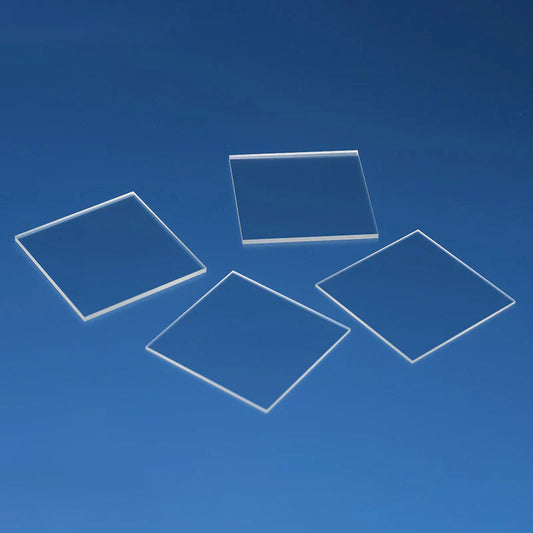
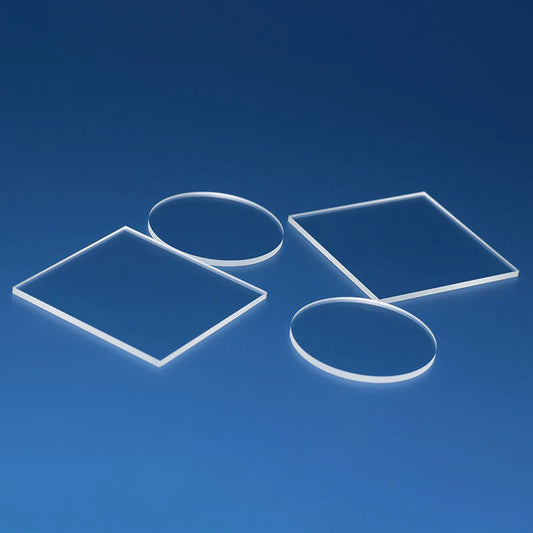
Optical windows protect cameras, detectors, vacuum systems and laser assemblies while transmitting the working beam with minimal wavefront change. The range includes standard and high-precision plane windows, wedged and Brewster windows for reflection control, dome windows for wide-field environmental protection, and optical flats used as interferometric reference surfaces. These geometries address different requirements for sealing, ghost suppression, beam deviation, inspection and sensor protection.
Select the window type from the optical path first, then compare wavelength range, substrate, diameter or clear aperture, thickness, surface flatness, parallelism or wedge, surface quality and coating. K9 optical glass suits many visible instruments, UV fused silica supports ultraviolet and low-expansion use, sapphire adds hardness and durability, and quartz families serve thermal and precision applications. Product-family pages provide the exact model dimensions and tolerance data needed for mechanical integration.
BROWSE BY OPTICAL FUNCTION
Choose a product family

Dome Windows
2 product familiesOptical dome windows protect sensors while preserving a wide field of view and reducing aerodynamic or environmental exposure.
Browse family →
Optical Flats
4 product familiesOptical flats provide precision reference surfaces for interferometric inspection of flatness and surface form.
Browse family →
Plane Windows
8 product familiesPlane optical windows protect cameras, sensors and laser assemblies without intentionally changing beam power.
Browse family →
Wedge & Brewster Windows
3 product familiesWedge and Brewster windows suppress unwanted etalon fringes, back reflections and ghost images.
Browse family →PRODUCT FINDER
Windows & Optical Flats
Compare product families, then open a family to select the exact model, dimensions and coating.
17families found


No matching product families on this page
Try another keyword or clear the search field.
SELECTION QUESTIONS
Windows & Optical Flats FAQ
Technical answers to the questions that most often affect model selection.
When should I use a plane, wedge or Brewster window?
Choose a plane window for general beam-path protection. A wedged window separates front- and rear-surface reflections to reduce etalons and ghost images. A Brewster window is intended for a defined incidence angle and polarization state where p-polarized reflection must be minimized.
How should window material be selected?
Select the substrate from the required wavelength range, thermal load, mechanical environment and cost target. K9 optical glass serves many visible systems, UV fused silica supports ultraviolet and thermally stable use, and sapphire offers greater hardness and environmental durability.
Which window tolerances affect optical performance?
Transmitted wavefront is influenced by surface flatness, parallelism or wedge, thickness variation and material homogeneity. Surface quality and edge finish matter for scatter, handling and high-power applications. Optical flats additionally require the reference surface grade to match the inspection method.
Need a different diameter, tolerance or coating?
Send your material, wavelength, dimensions and quantity for review.
TECHNICAL RESOURCES
Related engineering articles
Selection guides and practical notes matched to windows & optical flats.

Material Selection
What Is Borosilicate Glass? Properties, Uses & Buying Guide
Borosilicate glass is a silica-based glass with boron trioxide added to the mix. That one addition changes how the glass behave...
Read article →
Material Selection
Borosilicate Glass vs. Soda-Lime Glass: What's the Difference?
Soda-lime glass and borosilicate glass are both silica-based, but a difference in composition gives them very different perform...
Read article →
Material Selection
Borosilicate Glass vs. Fused Silica: Which Should You Choose?
Borosilicate glass and fused silica both handle heat better than ordinary glass, but they're not interchangeable. Fused silica ...
Read article →
Material Selection
What Is Ultra-Thin Glass? Thickness Range & Applications
Ultra-thin glass is glass thin enough to flex — in some cases enough to fold — while keeping the scratch resistance, chemical s...
Read article →
Material Selection
Soda-Lime Glass vs. Low-Iron Glass: What's the Difference?
Low-iron glass is soda-lime glass with the iron content stripped down. That single change is the whole story — but it has a vis...
Read article →
Coating Guide
Anti-Reflective vs. Anti-Glare Glass: What's the Difference?
Anti-reflective and anti-glare glass both aim to make reflections less of a problem, but they get there through completely diff...
Read article →- Die Auswahl einer Auswahl führt zu einer vollständigen Seitenaktualisierung.