
What Is Borosilicate Glass? Properties, Uses & Buying Guide
Borosilicate glass is a silica-based glass with boron trioxide added to the mix. That one addition changes how the glass behaves under heat and chemical attack enough that it's become the default choice anywhere ordinary glass isn't tough enough — lab glassware, high-end cookware, and precision optical and industrial components.
Key Specifications at a Glance
| Property | Typical Value |
|---|---|
| Main components | SiO2, B2O3, plus small amounts of Na2O and Al2O3 |
| Coefficient of thermal expansion | ~3.3 × 10⁻⁶ /°C (about 1/3 that of soda-lime glass) |
| Max continuous use temperature | ~450–500°C |
| Thermal shock resistance | High — withstands rapid temperature swings without cracking |
| Chemical resistance | High — resists acids and most solvents |
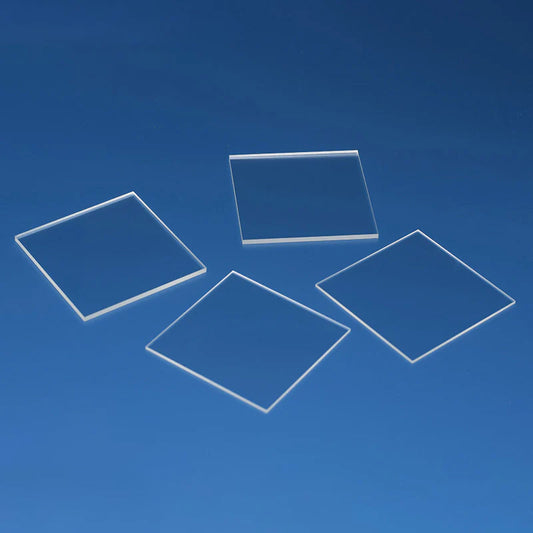
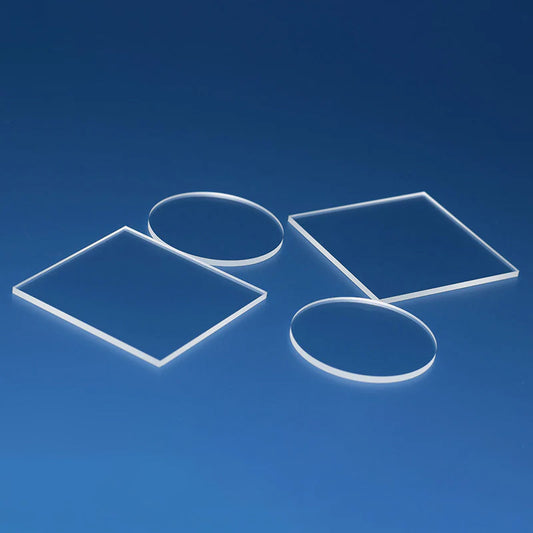
| Common forms | Sheets, tubes, rods, custom-cut components |
What Makes It Different
Ordinary soda-lime glass is mostly silica, soda, and lime. Borosilicate glass swaps a meaningful share of that composition for boron trioxide, which lowers the glass's coefficient of thermal expansion dramatically. In practice, that means borosilicate glass can go from a hot oven to room temperature — or absorb a sudden burst of heat from a laser or a flame — without the internal stress that cracks ordinary glass.
Properties Worth Knowing
- Thermal shock resistance — the headline property, and the reason it's standard in lab glassware and cookware
- Chemical durability — resists corrosion from most acids, so it holds up in chemical processing and analytical equipment
- Higher softening point — borosilicate needs more heat to shape or damage than soda-lime glass
- Good optical clarity — transmits visible light well, though not as far into the UV as fused silica
Applications
- Laboratory glassware (beakers, flasks, reagent bottles)
- Optical windows and substrates for moderate-temperature environments
- Cookware and lighting components
- Pharmaceutical packaging
Buying Tips
Borosilicate glass isn't a single formula — different manufacturers' grades vary slightly in composition and thermal expansion coefficient. If you're replacing a part or matching an existing assembly, confirm the specific grade rather than assuming "borosilicate" alone is enough of a spec.
FAQ
Is borosilicate glass the same as Pyrex?
Pyrex is a brand name historically associated with borosilicate glass, though some modern Pyrex-branded consumer products use tempered soda-lime glass instead. When precise thermal performance matters, specify borosilicate glass by its actual composition or grade, not the brand name.
Can borosilicate glass go in the freezer and then the oven?
Yes — that's exactly the kind of thermal shock it's designed to handle, within its rated temperature range.